
Horse sale & lease listings
List your horse for sale or lease, free.
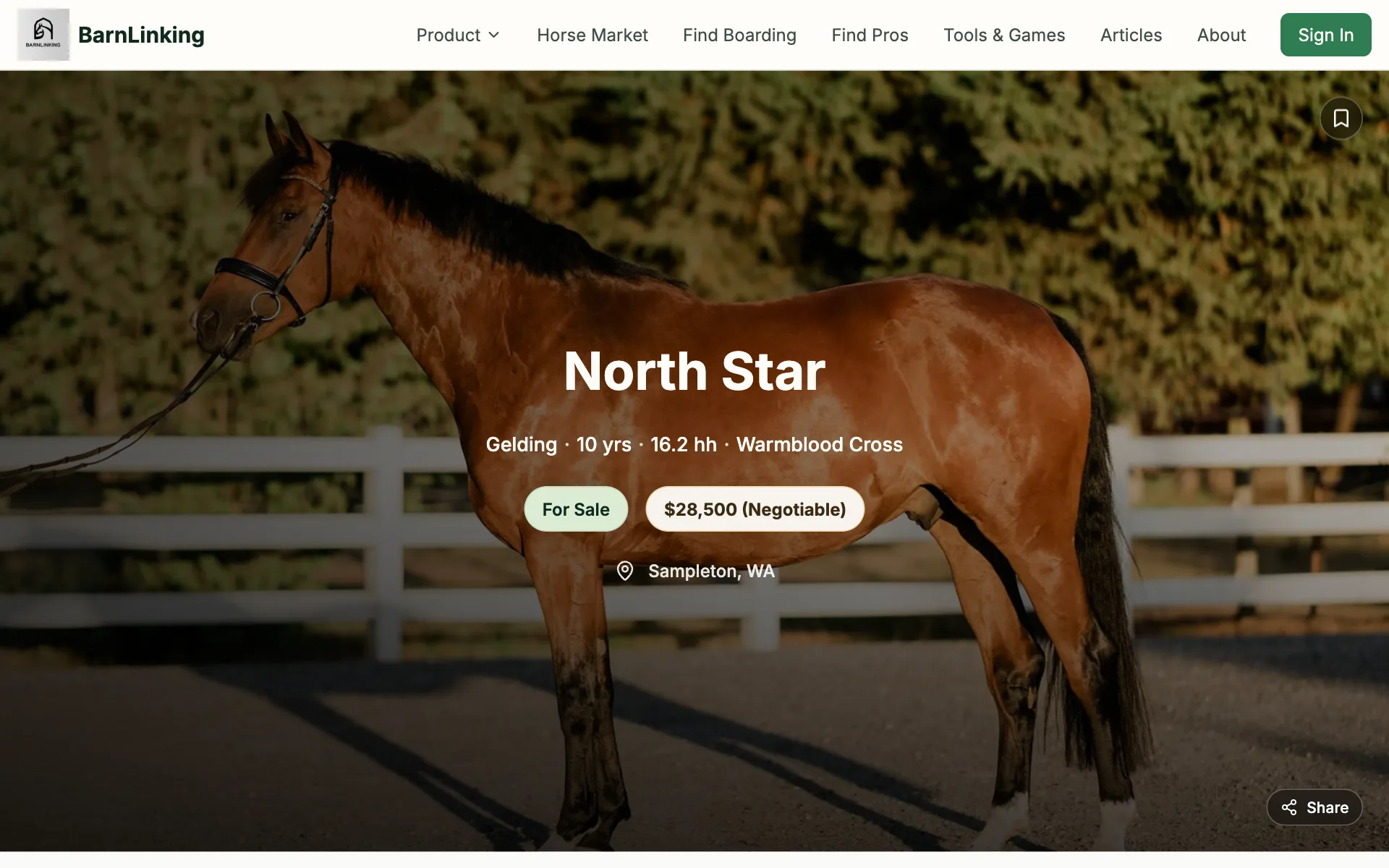
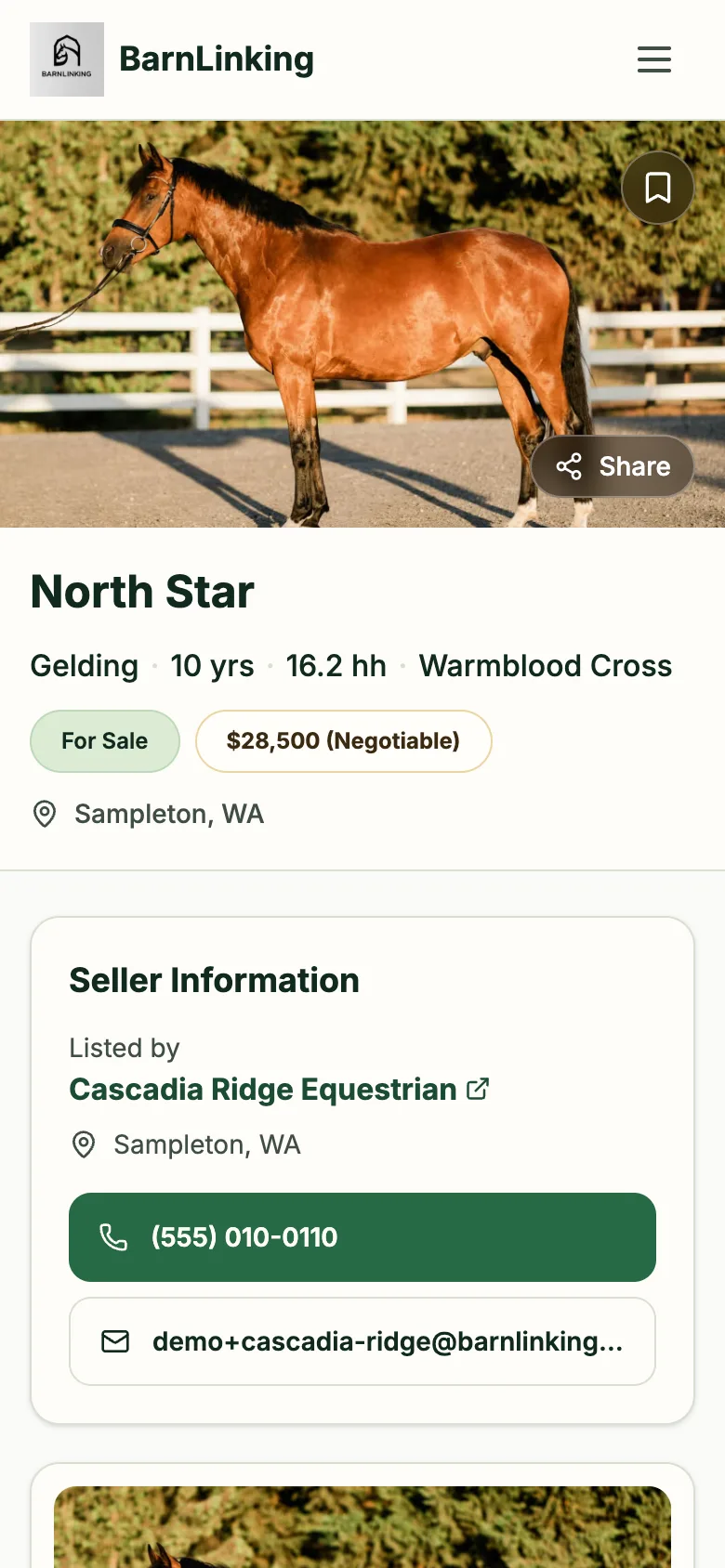
Photos, video, price, and the details buyers check first, on one page with your own contact. Share the link anywhere. The listing also appears in the BarnLinking Horse Market.
- No commission
- Buyers contact you directly
- No ads on your listing
Why a listing page
A sale post gets two good days. Your listing keeps working.
Keep posting in Facebook groups to get the horse seen. A listing page gives every post one link to point to, with the current price, status, and details.
The post gets buried
A few days later it has sunk under newer posts, and the buyer who meant to come back can't find it.
With a BarnLinking listing
The listing keeps the same link, so it is still there when a buyer comes back a week later.
Details end up everywhere
Price, video, and updates spread across comments and messages, and different buyers get different answers.
With a BarnLinking listing
Price, video, status, and details live on one page that you edit in one place.
Five posts, five versions
You shared the horse in five groups. Now he is on trial, and every one of those posts still says available.
With a BarnLinking listing
Put the listing link in each post. Change the status once, and every post leads buyers to the current page.
Buyers are far away
A buyer two states away won't make the drive on a few photos and a comment thread.
With a BarnLinking listing
Video, price, and the details they would ask on the first call sit on one page they can study and send to their trainer.
Why BarnLinking
Free, clean, and yours to change.
- No commission
- BarnLinking takes no cut of the sale, and Basic lists up to 2 horses free.
- No ads on your listing
- Buyers see your horse, your photos, and your details, without banners or pop-ups around them.
- Live when you publish
- No waiting for someone to approve the ad. The listing is public as soon as you press Publish.
- Change it yourself, anytime
- Update the price, photos, video, or status from your phone or computer, without contacting anyone.
- Buyers reach you directly
- Your phone and email are on the page, with no inbox in between. Buyers don't need an account to contact you.
- Found in the Horse Market
- The listing also appears in the BarnLinking Horse Market, where buyers search by place, distance, and the details they care about.
On the page
Everything a buyer asks about, in the order they ask.
- Photos and video
- A photo gallery plus YouTube videos of the horse under saddle or on the ground.
- Price and status
- A price or Price on Request, and a status buyers read at a glance: For Sale, For Lease, On Trial, Sold, and more.
- The quick facts
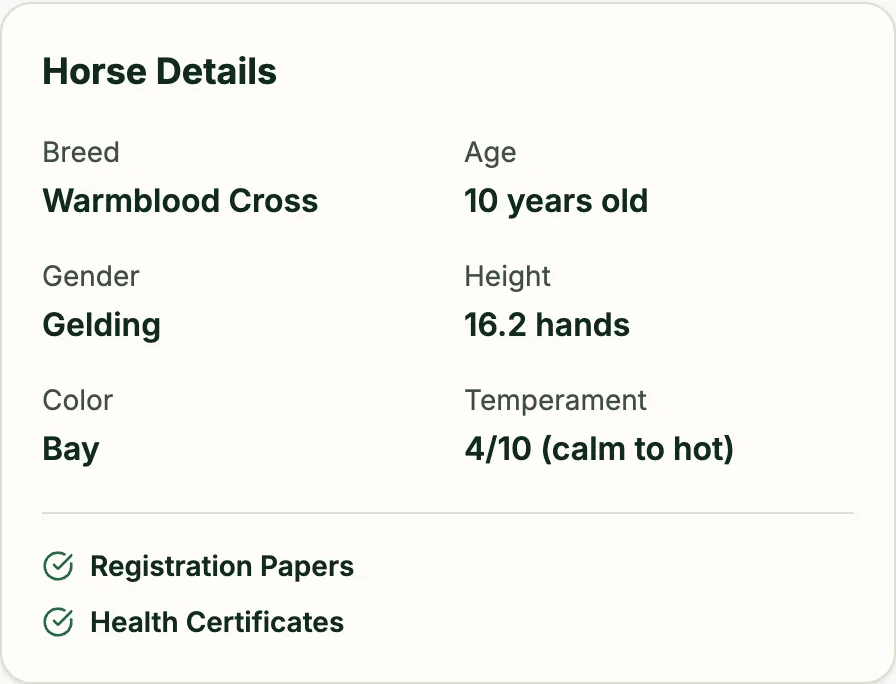
- Sex, age, height, and breed in one line, then color and temperament on a scale buyers read at a glance.
- Training and fit
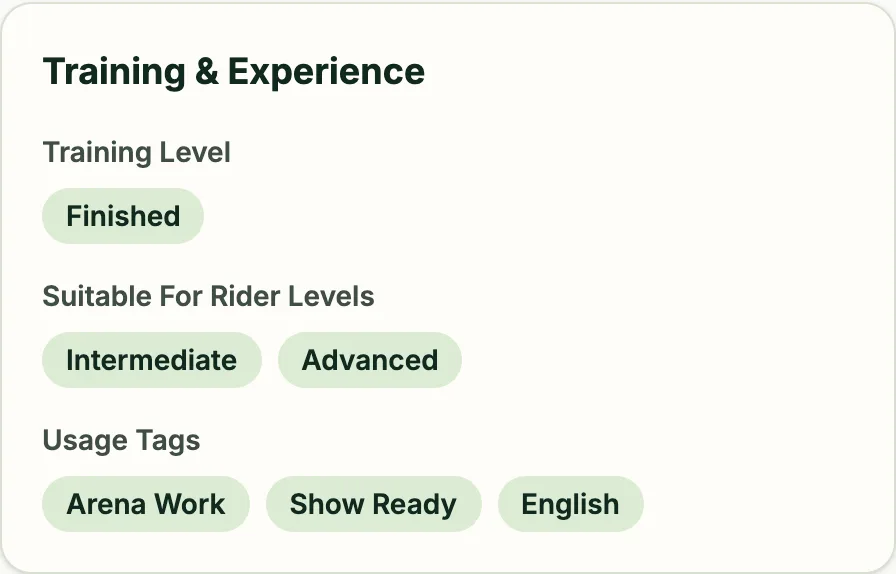
- Training level, the rider levels the horse suits, and what it does: arena work, trails, showing, and more.
- Papers and health
- Mark registration papers and current health certificates, so a buyer knows before the first call.
- Your contact
- Your phone and email on the page, with your barn's name when the horse is linked to your business.
- A printable flyer
- Download a one-page PDF with a QR code that opens the listing, for the barn board or a show.
- Where the horse is
- City and state on the page, so buyers can search near them in the Horse Market.
How it works
Listed today, current until it sells.
- 01
Add the details
Only the name, where the horse is, and how to reach you are required. Add photos, price, and the rest now or later.
- 02
Share one link
Post it in Facebook groups that allow sales, send it in texts, add it to your barn website, or print the flyer.
- 03
Keep it current
Change the price or status from your phone. Everyone who opens the link sees the update.
Mark a horse Sale Pending from your phone, and the listing shows it.
The Horse Market
Your listing also shows up where buyers browse.
Every active listing appears in the BarnLinking Horse Market. Buyers search near a place and filter by training level, rider level, use, sex, and availability.
Free for up to 2 listings. Pro raises the limit to 100 and removes the BarnLinking branding from your flyers.
Common questions
Before you list
Is it free to list a horse?
Yes. Basic is free with no card and includes up to 2 horse listings. If you sell more horses, Pro raises the limit to 100 listings.
Does BarnLinking take a commission when my horse sells?
No. BarnLinking takes no cut of the sale and does not charge per listing. Buyers contact you directly, and you handle the sale your way.
Where can I share the listing?
Anywhere a link works: texts, email, Facebook and Instagram posts, groups that allow horse sales, your barn website, and the printed flyer's QR code. When you edit the listing, every one of those links shows the update.
How do buyers find my listing?
Through the link you share, and in the BarnLinking Horse Market, where buyers search near a place and filter by training level, rider level, use, sex, and availability.
Can I change the price or mark the horse sold?
Yes. Edit the listing anytime and set the status to For Sale, For Lease, On Trial, Sale Pending, Lease Pending, Sold, Leased, or Off Market.
Do I still need Facebook groups and other sites?
They are still good for getting attention. A listing gives that attention somewhere to land: post wherever you like and point every post at the same page.
Keep reading
Before you list your horse
Practical guides on selling online, what to include in a listing, and where to share it for the best response.

How to Sell a Horse Online
Selling a horse online comes down to a few stages: build an honest listing, share it where the right buyers look, screen inquiries safely, handle trials and vet checks, and close the sale properly.
Read article
What to Include in a Horse Sale or Lease Listing
A good horse sale or lease listing helps the right buyer self-select before they message. Include clear photos, basic facts, suitability, price, location, and current status.
Read article
Where to Share a Horse Sale or Lease Listing
A good horse listing often needs more than one channel: social sharing, marketplace discovery, trainer networks, and one clean link you control.
Read articleGive your horse a page worth sharing.
Create the listing, share one link, and keep it current until the horse has a new home.
Create a free listing- No commission
- Buyers contact you directly
- No ads on your listing